Chronic Pain - My Journey to Freedom
My journey from over 25 years of chronic pain to a full life, free of limitations.
CHRONIC PAINANXIETYLOW MOOD
Maria Hancock
5/26/20247 min read
Chronic Pain - My Journey to Freedom
The Start
Even before what I call my start of my chronic pain journey, I had experienced various symptoms that I now understand were caused by stress and trauma. As a young child, I had recurring tonsillitis, which I now understand as being due to my inability to vocalise my feelings of hurt and anger. As a teenager I had knee pain that was explained as "growing pains" and writers cramp during the stress of my GCSE's. I also felt depressed and had back pain when I sat at my desk at school (I disliked school). Then IBS in my early 20's, and insomnia and anxiety on occassion. All these symptoms had no real physical cause, and occurred when I was stressed. I was also diagnosed with Polycystic Ovaries, which seemed to resolve itself (as I later got pregnant with no difficulty and symptoms disappeared).
When I was 25 years old, my problems got bigger when I developed pains in my wrist whilst using the computer mouse. It then spread into both wrists, then up both arms, upper back and neck, leaving me completely unable to use a computer without pain after a few months. I was diagnosed with RSI - Repetitive Strain Injury and could only return to work using dictation software. I was devastated and was told there was no cure. No pain medication worked and the pain could be excruciating at times.
The pains had a profound effect upon my life – my ability to cook, drive, clean, shop, carry bags, wash and even blow dry my hair. I felt depressed and angry at times, and most people found it difficult to understand the pain I was in, as it couldn't be seen. Anything mildly repetitive would set off pains that could quickly spread and leave me even sore to the lightest of touches. I was prescribed painkillers (Naproxen) which I gave up taking as they had bad side effects and had no effect on the pain. The only relief I could find was numbing my muscles by rubbing ice cubes on my muscles and joints, smothering myself in Tiger Balm and avoiding anything that might cause me pain.
No clinician could tell me what was actually injured or causing the pain. My diagnosis didn’t help me understand what was wrong with me nor to help me learn how to overcome it. One consultant told me the cause was a long neck?! Later, an MRI added severe stenosis as an explanation. All NHS physiotherapy could do was provide 6 weeks of sessions in neck traction, which made no difference. I then had a multitude of expensive and mostly pointless treatments: reflexology, acupuncture, more physiotherapy (at least 3 or 4 different physiotherapists), osteopathy, chiropractic, Low Level Light Therapy, healing, kinesiology, the Alexander Technique. I tried exercises, stretches, rest, herbs, meditation. Meditation and acupuncture was the only thing to offer some short term respite from the pain. After many years trying various forms of therapy I had only made a little and very gradual progress. My symptoms eased off a little over a number of years, yet I was still limited to having to use dictation software to use a computer and had to limit activities like driving, heavy work and cooking.
When I became a parent for the first time in my early 30's it was an extra challenge. Luckily my daughter was small and I gradually got stronger as she grew and found I was gradually able to do a little more. I would have to plan everything around my pain, as lifting my baby, pushing a push chair, feeding her, breast feeding, cooking etc all affected my pain. I even had to take on paid help to assist me a couple of days a week and we hired a cleaner. I felt ashamed that I couldn't cope alone. When my son was born (a much bigger baby!), I had improved a little. I continued very, very slowly to improve over the years but still had times that I would have sudden flare ups out of seemingly nowhere. I was limited in my career as I had to find work where I was able to use dictation software and find understanding employers. I still experienced some pain in my hands or arms during most days and had given up on ever being free of the pain. Instead I just learned to live with it and accept it.
Chondromalacia Patella / Bilateral Knee Pain
I may have learnt to live with that pain, however at age 39 things got way worse. During a Zumba class, a pain started under one of my kneecaps. Within days it worsened and spread to both knees even though there appeared to be no injury. I was told by my GP that I had tendonitis and that it would go in 6 to 8 weeks. My experience with the RSI had unfortunately taught my brain to expect pain to stick around, and it did.
A couple of months later, I was diagnosed (using MRI) as chondromalacia patella. However, (and this should have made me question the diagnosis) the consultant also told me that my knees were “as you would expect for my age”?! I pushed to have a physical treatment to make it go away, as I believed it to have a physical cause. Unfortunately I had an arthroscopy on both knees (to "flush" them out), but this just caused even more pain and recovery from the surgery took 3 months. Although I slowly improved a little over a further 12 or so months and was sometimes able to walk a little pain free, the pain was variable and it severely limited my walking and standing. I avoided many activities, and was so limited in how long I could walk or stand, that ordinary activities that I took for granted became quite difficult. I had 2 young children and wanted to be active with them and I felt depressed, angry, and guilty at the impact it had on my family and friends.
Yet again I spent thousands of pounds and many years trying different treatments. I tried different physiotherapists, (including one that specialised in knee pain). He advised me to strengthen my quads and hip flexors and told me 50% of people get better. I had initial improvement which excited me, yet later the pain spread to my shins and then worsened. I felt like an utter failure and I blamed myself. I tried chiropractic, acupuncture, osteopathy, ultrasound, prolotherapy knee injections, rest, MBST treatment. Sometimes I improved a little and then worsened again and so I became fearful of becoming hopeful as I couldn't bear the disappointment of continued pain each time.
Physiotherapy and pilates helped a little and acupuncture gave a little short term pain relief, but after many years and so much effort, at best I could walk a mile pain free and stand for about 40 minutes. I still couldn’t do any form of exercise except Pilates and I bought an electric bike to help me get mildly active.
Despite all this, or perhaps because the thought of the pain being permanent was unbearable, I would not allow myself to think that I could never overcome the pain. When my husband would say “we can’t do x because of your knees”, I would respond, “not at the moment, but maybe one day”.
The Breakthrough
The breakthrough came after I listened to a podcast about chronic pain in the summer of 2022. I came across the Podcast "The Cure for Chronic Pain", by Nicole Sachs. I was very sceptical as I thought that if there was a CURE for chronic pain, surely we would all know about it, right? However, there were many listeners and positive reviews, I was curious. I listened to the podcast and she talked of how many people she had cured of chronic pain and mentioned Curable. It felt too unbelievable, so I wanted to know the science and proof of how it was possible to cure pain. The curable podcast "Like Mind Like Body" explained the scientific proof behind Mind Body Syndrome (MBS) and there were dozens and dozens of stories of podcasts featuring people that had overcome many years of chronic pain just like me. I allowed myself to become excited and hopeful.
I continued my research, read books, listened to a number of podcasts and understood the science behind MBS. I gradually began to believe that I did indeed have MBS and realised I was scared to get started on the work needed as my hopes had been dashed so many times before, I was scared to be excited about potentially being free of pain again.
After years of struggling with both chronic pain and the mental health challenges that came with it, I reached a point where I knew I needed more support. I decided to work one-to-one with a Pain Reprocessing Therapist and began to prioritise my wellbeing.
I committed to daily journaling, meditation focused on bodily sensations and emotions, and made a conscious effort to seek out and notice positive feelings. Early on, I realised that I had developed a deep fear of movement, rooted in the fear of triggering pain. I knew I needed to address this, so I started small—walking just short distances each day, gradually increasing as I built confidence.
Within a few weeks, I was walking farther than I had in years—and, to my surprise, I was mostly pain-free. As I kept going, my fear lessened. When sensations did arise, I was able to stay curious instead of anxious. I noticed that when I met them with this mindset, the sensations often faded or at least didn’t escalate, whereas before, they would quickly intensify. It became clear that my mindset was playing a powerful role in my pain.
Another five or six weeks passed, and I was walking several miles at a time. I felt elated—this progress was life-changing. What began as a hope that I might improve had transformed into a deep knowing that I would heal. I no longer worried about how long it would take; I felt calm and confident that full recovery was possible.
Encouraged by this progress, I also began to reduce my reliance on dictation software, slowly increasing the time I spent using my hands on the computer. When pain showed up, I used somatic tracking to stay present and nonjudgmental, and once again, I made steady, meaningful progress.
The one to one sessions helped me to be able to coach myself through any set-backs and I continued to make progress.
If you'd like to understand more about how I overcame my symptoms, please read my related blog post.
Life Today
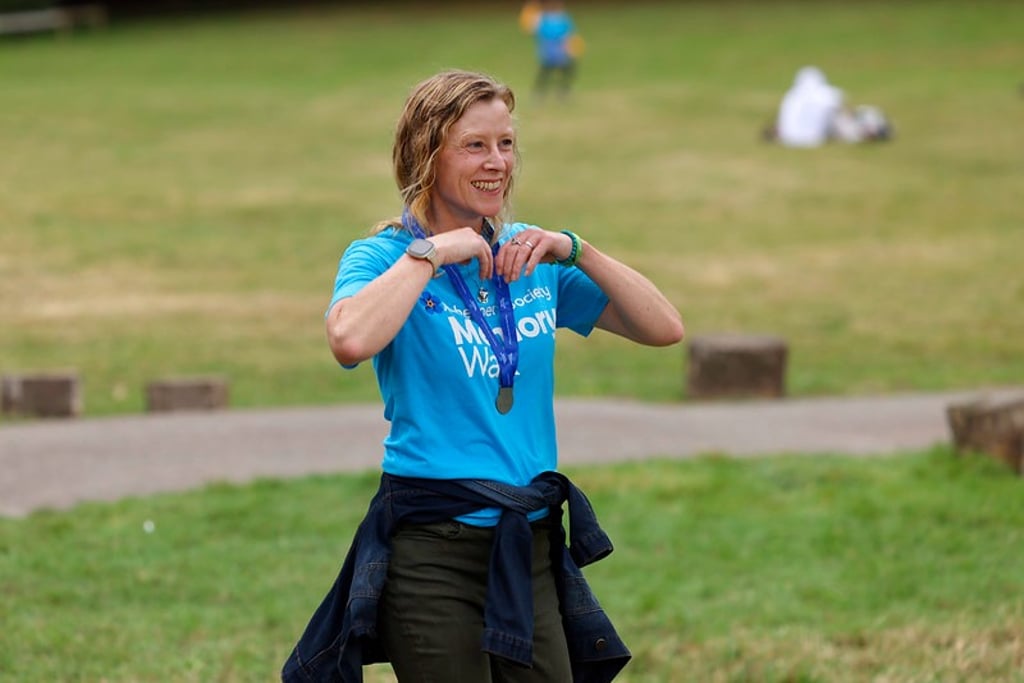
Today, I can live life just as freely as any healthy adult. I regularly go on long walks, do aerobic exercise, write, use a computer, knit, sew, lift weights in the gym and so on. I have occasional symptoms like pain, low mood, anxiety and so on, because I am a human being living life, and life is not always easy.
I continue to use all the tools I learnt during my recovery, and continue to research and add to them to help me to surf the waves of life's ups and downs (and to help others too). I continue to take responsibility for my emotions, have a regular meditation practice, journal when I need to and do breathwork and somatic work to help to continue processing and being with my emotions.
MH Wellbeing, Maria Hancock MSc GQHP
Specialist in Anxiety, Stress and Chronic Symptoms
Trauma-Informed Somatic Therapist, Hypnotherapist, Mindfulness Teacher, SIRPA Pain Recovery Practitioner
Local areas: Horley, Reigate, Redhill in Surrey and Crawley, Horsham, Copthorne in West Sussex. English Speaking Online Therapy.